Lighting Types Interior Design Ideas: Where to Place Every Light in Your Home
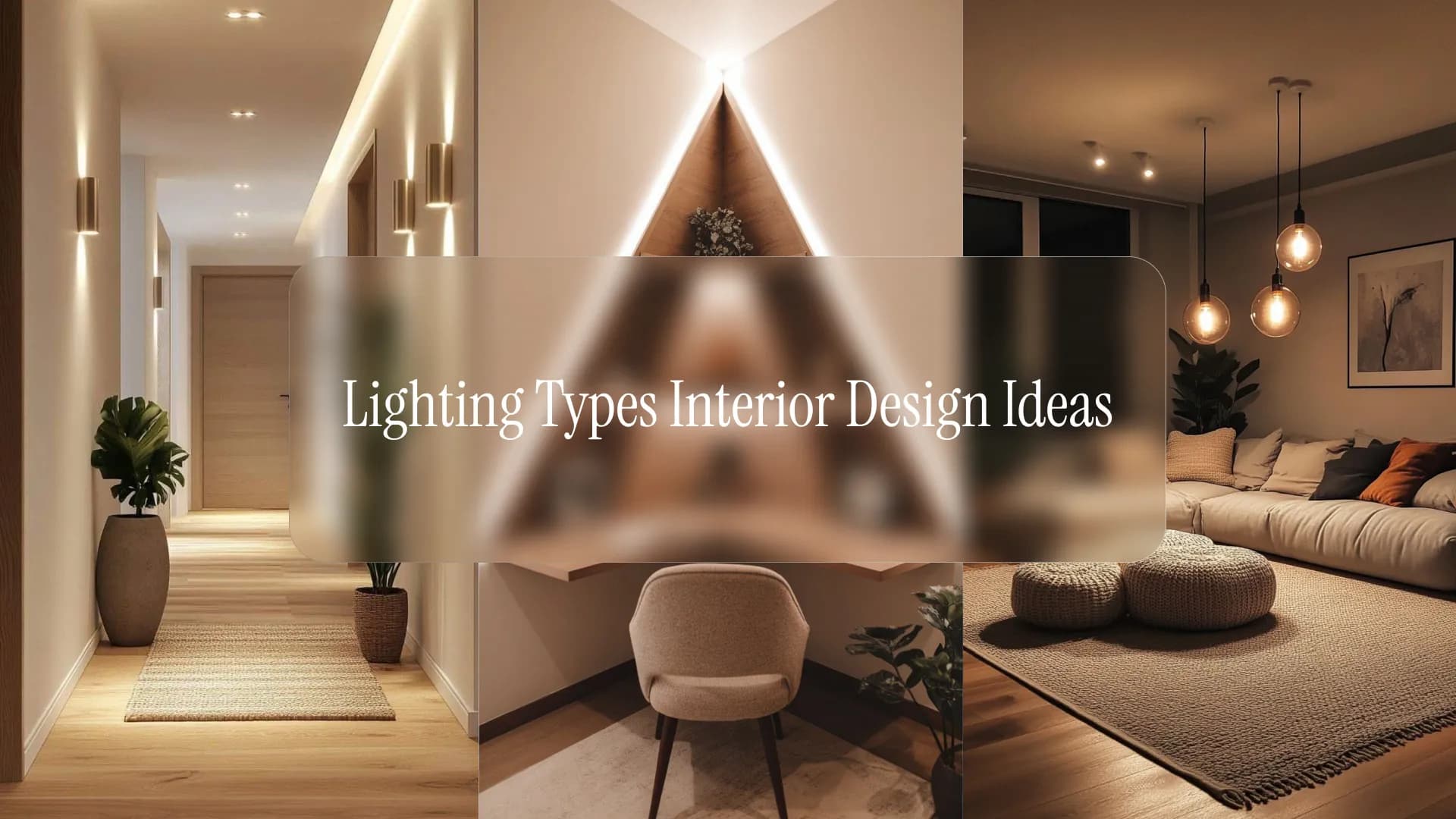
Lighting Types Interior Design Ideas: Where to Place Every Light in Your Home
Lighting doesn’t just brighten a space—it defines how your home feels, functions, and flows. Many homes look unfinished not because of furniture or finishes, but because lights are placed without a plan.
This guide breaks down lighting types in interior design with simple, real-world ideas so you know exactly where to place lights, how to layer them, and how to avoid common mistakes homeowners make.
Whether you’re building, renovating, or upgrading fixtures, this blog will help you visualize lighting like a designer—without the jargon.
Why Lighting Placement Matters More Than Fixtures
A beautiful chandelier in the wrong place fails.
A simple LED strip in the right place transforms a room.
Good interior lighting:
- Improves comfort and mood
- Makes rooms feel larger and warmer
- Highlights architecture and finishes
- Supports daily activities without eye strain
The secret is layered lighting, not brighter bulbs.
The Two Foundations of Interior Lighting
1. Natural Lighting (Daylight Planning)
Natural light changes throughout the day and should be controlled, not blocked.
Where it works best:
- Living rooms (south or east-facing)
- Dining areas
- Bedrooms (filtered morning light)
Design tips:
- Use sheer curtains for soft diffusion
- Add mirrors opposite windows to bounce light
- Avoid glossy finishes directly facing sunlight

2. Artificial Lighting (What You Control)
Artificial lighting is where design decisions matter most. It allows you to:
- Create zones
- Control mood
- Highlight features
- Balance natural light loss at night
Interior designers work with five main lighting types.
1. General Lighting (Overall Illumination)
Purpose: Light the entire room evenly
Think: “Can I move safely when this is the only light on?”
Best placements:
- Central ceiling lights
- Flush mounts in low ceilings
- Chandeliers in living or dining rooms
Pro tip:
Never rely only on general lighting—it creates flat, shadow-heavy spaces.

2. Ambient Lighting (Soft Indirect Glow)
Purpose: Create warmth and depth
Difference from general lighting: Indirect and softer
Where to place ambient lighting:
- Cove lighting in false ceilings
- Wall sconces washing light upward
- Concealed LED strips above wardrobes or cabinets
Best rooms:
- Living rooms
- Bedrooms
- Media rooms

3. Task Lighting (Function First)
Purpose: Help you see clearly while working
Where task lighting is essential:
- Kitchen countertops (under-cabinet lights)
- Reading corners
- Study desks
- Bedside reading lights
- Bathroom mirrors
Placement rule:
Task lights should never cast shadows from your own body.

4. Mood Lighting (Comfort & Atmosphere)
Purpose: Make spaces feel cozy and lived-in
Usually eye-level lighting
Best mood lighting placements:
- Table lamps on side tables
- Floor lamps near sofas
- Lamps on console tables
- Soft bedside lamps
Bulb tip:
Warm light (2700K–3000K) only. Bright white kills ambiance.

5. Accent Lighting (Highlight What Matters)
Purpose: Draw attention to features
Brightness: Stronger than ambient, focused
Where accent lighting works best:
- Artwork and wall art
- Decorative niches
- Textured walls
- Indoor plants
- Display shelves
Popular options:
- Spotlights
- Track lights
- Recessed directional lights

Lighting Effects Designers Use (And You Should Too)
Downlighting
Focused light from above. Use sparingly and balance with softer layers.
Uplighting
Lights bounce off ceilings for a calm, spacious feel.
Wall Washing
Even light across walls—perfect for clean, modern interiors.
Wall Grazing
Highlights texture like stone, fluted panels, or brick.
Perimeter Lighting
Defines room edges using coves or cornices, making spaces feel larger.

Room-by-Room Lighting Placement Ideas
Living Room
- General: Chandelier or ceiling light
- Ambient: Cove lighting
- Mood: Floor + table lamps
- Accent: Artwork spotlights
Bedroom
- Ambient: Soft ceiling or cove lighting
- Task: Bedside reading lights
- Mood: Lamps with fabric shades
Kitchen
- General: Ceiling downlights
- Task: Under-cabinet lighting
- Accent: Pendant lights over island
Bathroom
- Task: Mirror lights at eye level
- Ambient: Ceiling lights with diffusers

Common Lighting Mistakes Homeowners Make
- Using only one ceiling light
- Skipping dimmers
- Placing lights without furniture planning
- Choosing cool white bulbs for homes
- Ignoring wall and eye-level lighting
Simple Lighting Rules That Always Work
- Layer at least 3 lighting types per room
- Add dimmers wherever possible
- Warm light for homes, cool light only for task zones
- Hide light sources, reveal light effects
- Plan lighting after furniture layout—not before
Final Thought: Lighting Is a Design Investment
Well-planned lighting makes even modest interiors look premium—and poor lighting can ruin expensive spaces.
If you’re planning a new home or renovation, lighting should be designed, not guessed.
👉 Book a private lighting consultation: